Waikiki Beach Parasail · Non-swimmers
Can you parasail if you can’t swim?
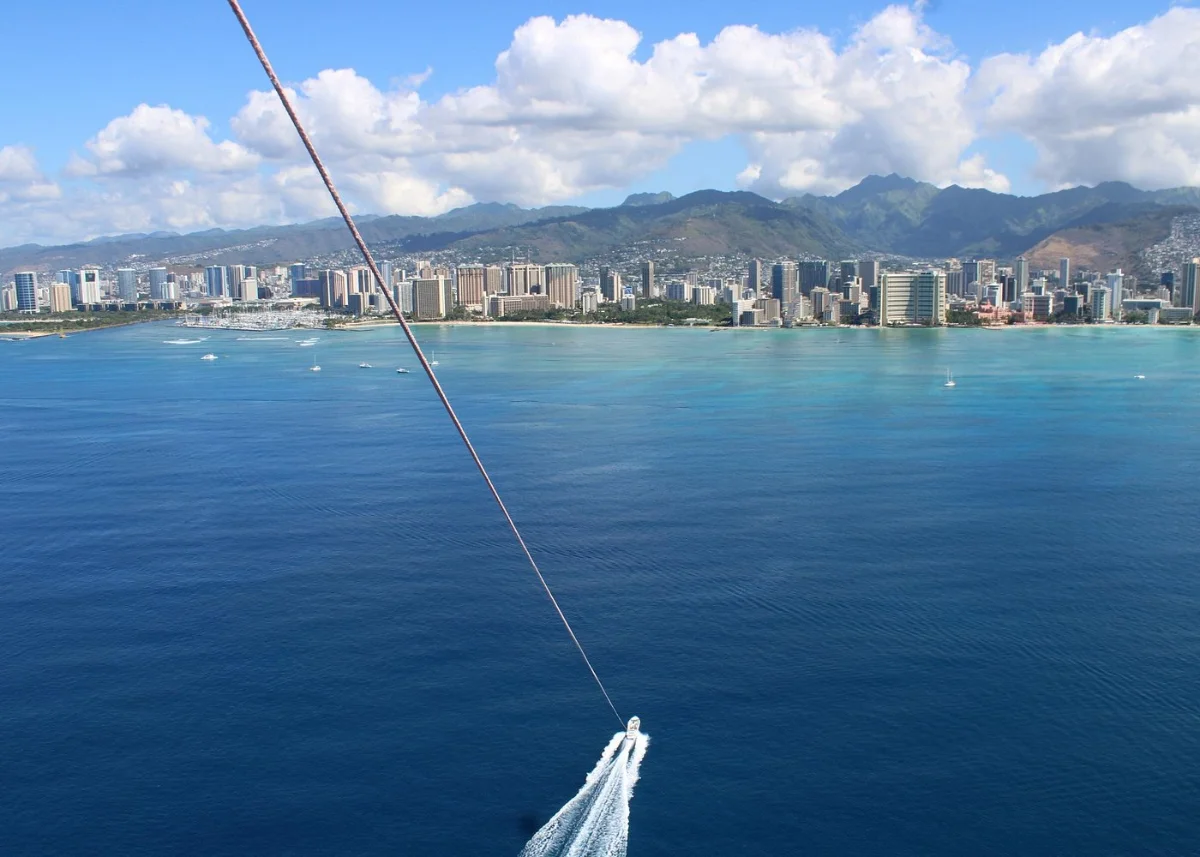
Yes. You take off from the boat deck, fly up to 1,200 feet over Waikiki, and land back on the deck. The only time anyone touches the water is the optional mid-flight dip — and you simply don’t ask for it.
Why swimming isn’t part of it
Parasailing in Waikiki is a boat activity, not a beach one. You board at the dock at Kewalo Basin Harbor — no wading out — and the crew fits your harness on the deck while the boat heads out. When it’s your turn, the line pays out from the boat as you rise, and reels you back down onto the same deck when the flight is over. Your feet never touch water unless you ask them to.
That is why the dry-deck design matters for non-swimmers: you are clipped into a harness that is attached to the canopy, and the boat does the rest. There is no swim out, no swim back, and no moment where you are expected to tread water.
The water dip is a choice, not a step
Some flyers love being dipped into the Pacific partway through the flight. It is optional: the crew does it only if you tell them you want it, and the boat lifts you straight back up afterwards. If the idea of the water is what’s making you hesitate, say nothing and stay dry start to finish. Nobody is dipped by default.
Nervous about the water anyway?
That’s common, and it doesn’t stop people flying. A few things that tend to help:
- Tell the crew when you check in. They fit every harness on deck and walk you through what happens before you go up.
- Fly tandem or triple. Sharing the harness with someone you trust is the usual answer for first-timers — flights take 1 to 3 flyers.
- Know who’s in charge. Captains are USCG-certified, the operation follows the ASTM standards for parasailing, and the captain makes the final weather call on the day.
- Remember the shape of the trip: up to an hour on the boat, with the flight itself inside that. You are on a boat, then in the air, then on a boat again.
Kids who can’t swim yet
Children fly from age 5, and most children that age aren’t strong swimmers — which is fine, because the harness goes on while they are standing on the deck and the crew stays with young flyers through takeoff and landing. Kids ride tandem or triple with an adult; the combined weight range for a shared flight is 125–560 lb. The full numbers are in the weight and age limits guide, and the parasailing with kids guide covers planning the day with children.
What to wear if you’re staying dry
Whatever is comfortable. You don’t need a swimsuit if you’re skipping the dip — you take off and land on deck. Bring sunscreen, sunglasses with a strap if you want them aloft, and a zipped pocket or leash for anything that flies with you. Cancellation is free, and if the weather turns before a safe flight is possible you reschedule at no charge or get a full refund.
Check availability